4 November 2026

Following the recent release of Sensuous Heirlooms, the Research Center for Material Culture has invited Dr Uhuru Portia Phalafala to give a public presentation about the book on November 4th at Wereldmuseum Amsterdam.
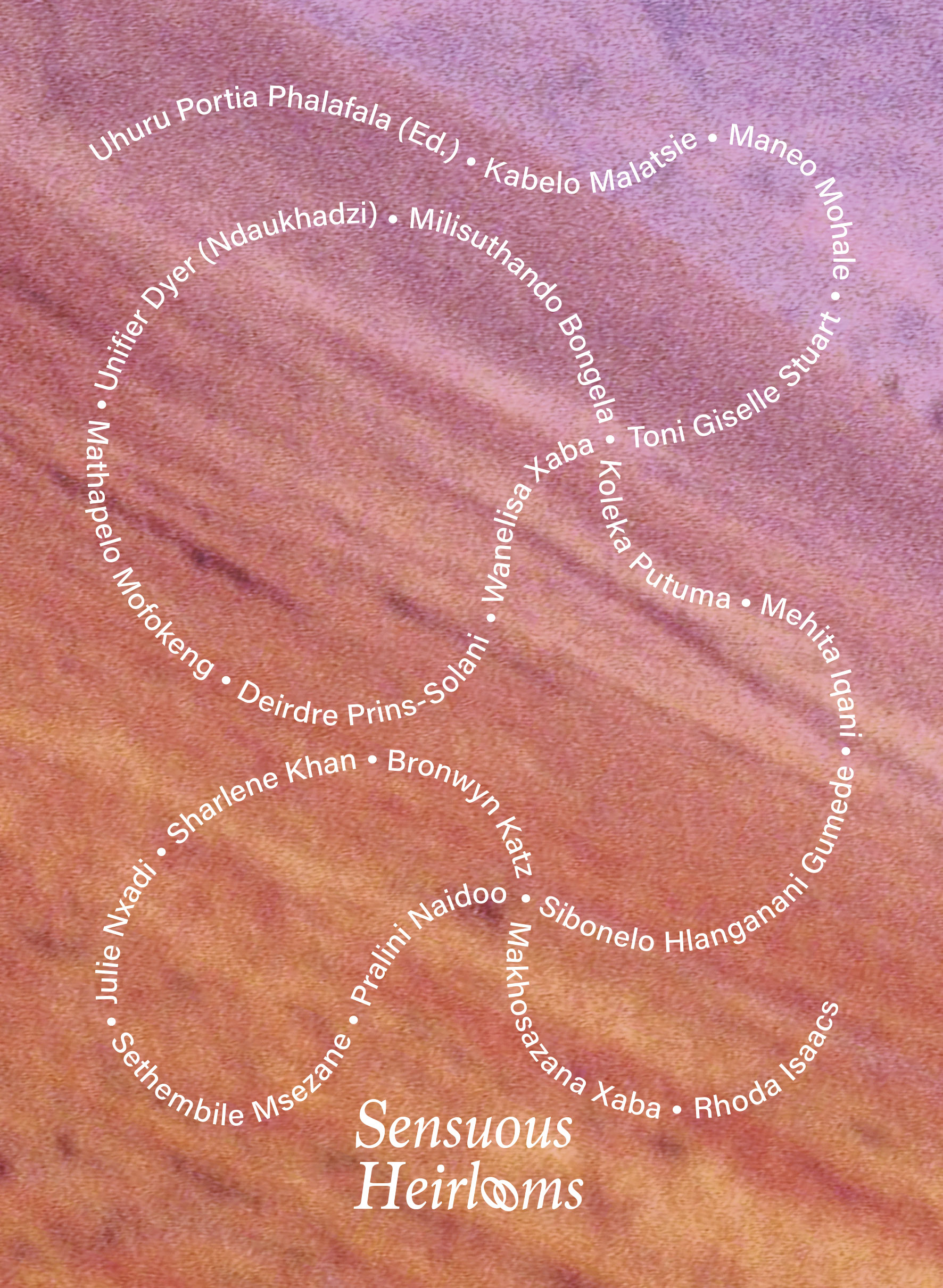
Sensuous Heirlooms, edited by Dr Uhuru Portia Phalafala, collects different essays on the possibilities of a matrilineal sense of heritage and inheritance. If heritage is a concept shaped in western modernity and tied to a patriarchal transmission of possessions, what can spring from matriarchal genealogies?
| 14.00 - 14.30 | Walk-in |
| 14.30 - 14.40 | Welcoming words by Carine Zaayman |
| 14.40 - 15.30 | Conversation with Uhuru Phalafala and Buhlebezwe Siwane |
| 15.30 - 16.00 | Discussion |
‘Rutang bana ditaola, le se ye natšo badimong’
Gather around these ditaola and feel into what we, proud custodians of hearth, have inherited, what we choose to steward and intentionally wield in these uncertain times. Sensuous Heirlooms dances with other lineages of knowledge, aesthetics, being, and doing unrecorded by official archives. It breaks out of the enclosures of traditional notions of inheritances by singing innate, intimate, intuitive, relational, sensuous, spiritual, and queer heirlooms underwritten by matrilineal stewardship and communal well-being.
With contributions by Kabelo Malatsie, Maneo Mohale, Toni Giselle Stuart, Wanelisa Xaba, Deirdre Prins-Solani, Mathapelo Mofokeng, Unifier Dyer (Ndaukhadzi), Milisuthando Bongela, Koleka Putuma, Mehita Iqani, Sibonelo Hlanganani Gumede, Pralini Naidoo, Sethembile Msezane, Julie Nxadi, Sharlene Khan, Bronwyn Katz, Makhosazana Xaba and Rhoda Isaacs.
Sensuous Heirlooms is a brilliant guide to different kinds of matrilineal inheritances that reside in water, dreams, songs, laughter, food, and storytelling. Offering a generous template of how we might move against narrow politics of inheritance, the language tenderly holds the histories and memories of our ancestors, mothers, sisters, grandmothers, aunts, daughters and friends.
Poetically gesturing towards ephemerality, affective heirlooms, spiritual practice, and memories, the essays undo claustrophobic readings of inheritance that are rooted in patrilineal chrononormativity. Instead, time is fluid, it dances in the ether, neither here nor elsewhere, simultaneously nowhere and everywhere. Moving away from material possession and ownership, the authors show that inheritance is capacious in form; it is a well that we and those who came before us equally source from and pour into.
This textual gesture reads as an affectionate chorus and symphony, a way into the possibilities of the matriarchive, all anchored by love. Lefa la rona ke lerato. Re filwe diphiri ka lerato la love.
Portia Malatjie (Curator, Art Historian)
Dr Uhuru Phalafala is a writer, cultural historian, and archivist with research interests in anti-colonial social movements, indigenous epistemologies and cosmologies, and jazz. Her work draws from a historical wellspring of Black spiritual and creative intelligence, harnessing the dream-building energies of African & Black Atlantic expressive cultures and feminist creative ingenuity firmly rooted/routed in wisdoms of spirit and soil. She is a Senior Lecturer in Literary Studies at Stellenbosch University, and the author of Mine Mine Mine (2023), Keorapetse Kgositsile & the Black Arts Movement: Poetics of Possibility (2024), and Sensuous Heirlooms (2026).
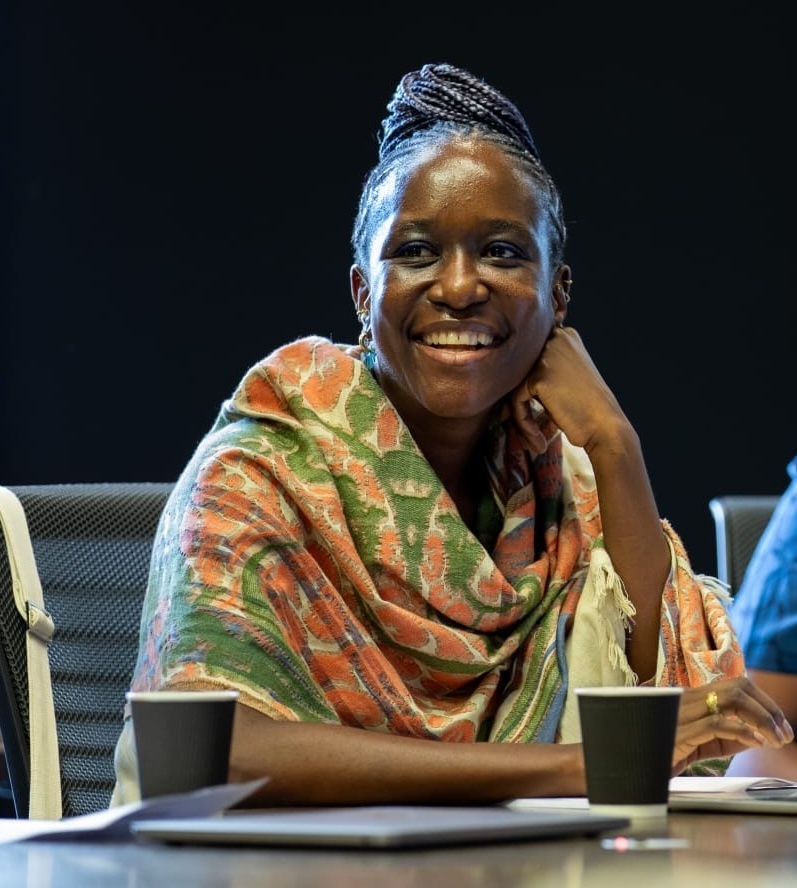
Buhlebezwe Siwani (b.1987, SA) is a visual artist that lives and works between Cape Town and Amsterdam. She works with performance, photography, sculpture, and installation. Siwani’s work interrogates the patriarchal framing of the Black female body and Black female experience within the South African context. As a Sangoma, a spiritual healer that works within the space of the death and the living, Siwani focused her artistic practice into rituality and the relationship between Christianity and African spirituality. Each of her projects deals with the relationship between ancestral rituals and modern life, touching social and political topics, such as the female body, Black communities, histories of colonisation and the paradoxes of our contemporary society, all seen through the filter of the artist’s own biography and experience.